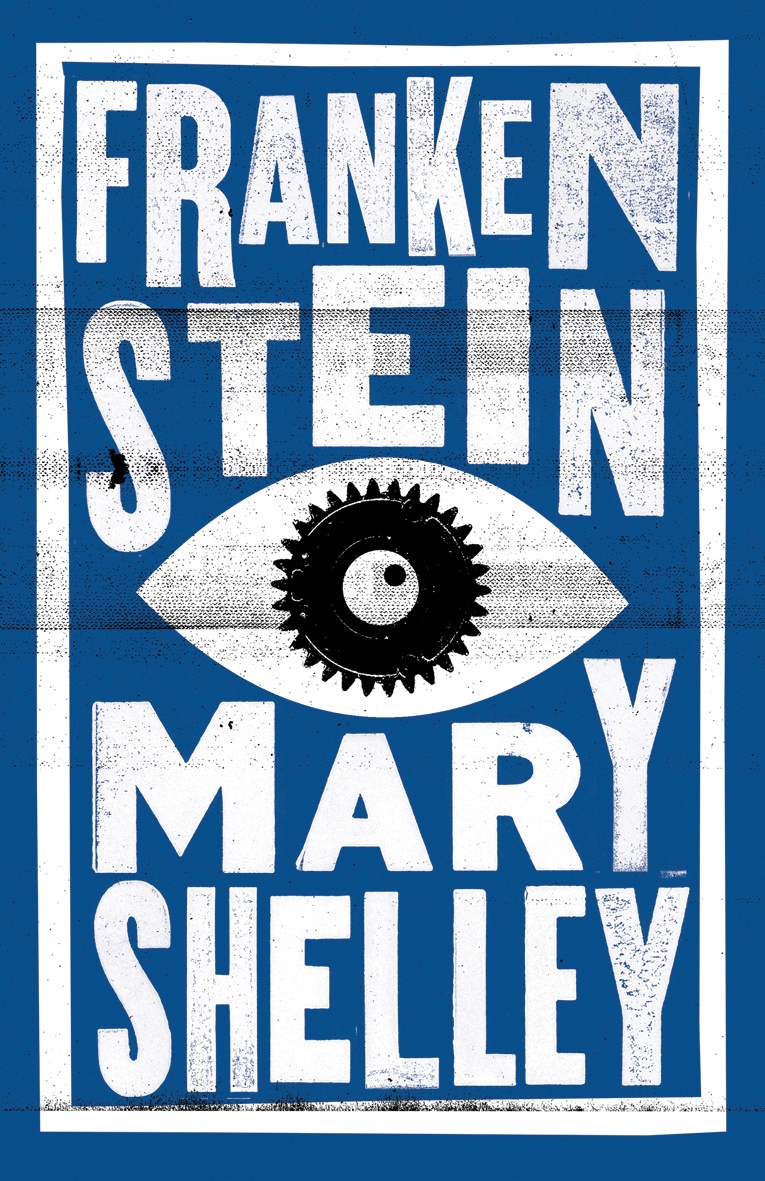
The Image of Elizabeth: Frankenstein by Mary Shelley

The appearance of a character forms an image in the mind of the reader, and many illustrative words cause one to form certain assumptions. In Mary Shelley’s Frankenstein, the appearance of Elizabeth paints a clear and vivid picture in the reader’s mind. Shelley writes, “Her hair was the brightest living gold, and, despite the poverty of her clothing, seemed to set a crown of distinction on her head” (42). Continue reading “The Image of Elizabeth: Frankenstein by Mary Shelley”
The Measure of Humanity: Part 3

One of the most primal reactions I can think of is the desire to live, to continue existing for as long as possible, to fight and scratch, and struggle to survive. The right to live is one we all desperately hold on to, the right to decide for ourselves to face tomorrow. In continuing to prove just how human he seems to be Roy says, “‘I want more life’” when asked what the problem is by Tyrell (Blade Runner). The desire to live, a conscious awareness of one’s continued existence and even more importantly a recognition that it will all end. Replicants are struggling to find agency in their lives, to make decisions about the way they live and what they do, and because their lives are confined to four years they are reduced to a limited number of experiences, to a limited existence. Data experiences a similar, if not slightly more logic bound, response to the possibility of his destruction. Continue reading “The Measure of Humanity: Part 3”

The Measure of Humanity: Part 1

I have always been fascinated by the idea that humanity is an intrinsic quality, one that is gained through life and experience, and that this quality is not necessarily constrained to mere humans. The question of what makes up humanity, who possesses it, and how can you measure its existence is one that has been explored in the science fiction genre for decades. I am interested in the concern specific works show over the idea as explored through whether or not mechanical engineered creations can possess humanity or even sentience. I want to explore the different ways Blade Runner and Star Trek: Next Generation delve into these questions, looking at the qualities and issues they investigate as well as the different concerns surrounding this debate as portrayed by the stances characters take.  The qualities that make a human deserving of rights are often ineffable and hard to define, and yet we hold our right to certain truths and respect to be self-evident. Continue reading “The Measure of Humanity: Part 1”

An Image of Love: “To My Dear and Loving Husband” by Anne Bradstreet

I have always had a soft spot for romantic notions and ideas. I love the idea of romance, I love the reality of a strong and loving relationship even better. “To My Dear and Loving Husband” by Anne Bradstreet, is her attempt to express the depths of her feelings and emotions towards her husband. Bradstreet instantly had my attention when she started with “If”, this use of a conditional clause intrigued me, she uses it to draw attention to the immense compatibility and love between the speaker and her husband. Continue reading “An Image of Love: “To My Dear and Loving Husband” by Anne Bradstreet”

Consuming​ Allegory: The Birthmark by Nathaniel​ Hawthorne

Nathaniel Hawthorne’s short story The Birth-Mark plays around with the ideas of allegory, and the effect symbolism can have on people. In The Birth-Mark, Aylmer, a man of science, can’t let go of the imperfection the birthmark on his wife’s cheek represents, he allows his emotions towards the birthmark to consume him, and ultimately leads to him losing his precious wife. Hawthorne is clearly warning of the dangers of placing too much power and meaning in such a trifling object as a birthmark. The only influence an object possesses is the power we place in it. Continue reading “Consuming​ Allegory: The Birthmark by Nathaniel​ Hawthorne”

Narrator’s Reality: The Real Thing by Henry James

In Henry James short story, “The Real Thing” the narration is through that of an unnamed main character, an artist. As such the entire story of “The Real Thing” is altered by the narrator’s perceptions. Every word, every moment is seen through his eyes and as such is shaded by his own interpretations of reality. In one scene the sentence starts with, “I perceived they,” this wording immediately informs the reader that the following information has no basis in fact but merely comes directly from the artist and his impression of the Monarchs. Continue reading “Narrator’s Reality: The Real Thing by Henry James”

Big Ben Chimes the Hour: Mrs. Dalloway by Virginia​ Woolf

Mrs. Dalloway by Virginia Woolf is a novel concerned with time. Time is used as a marker throughout the story as Big Ben chimes the hour. It is also bent and contorted to the novels will, as characters are consumed by memories of the past. Big Ben is particularly used to great symbolic importance. Returning home Mrs. Dalloway observes her neighbor out the window and remarks, “Big Ben struck the half-hour. How extraordinary it was, strange, yes, touching, to see the old lady…move away from the window, as if she were attached to that sound, that string…Down, down, into the midst of ordinary things the finger fell making the moment solemn” (127). Continue reading “Big Ben Chimes the Hour: Mrs. Dalloway by Virginia​ Woolf”

Poetry’s Response to Modernism and War: The Wasteland by T.S. Elliot

“The Wasteland” by T.S. Elliot is a brilliantly complex and hard to interpret poem. Dealing with the after-effects of World War 1, it explores how poetry and modernism should respond to such devastation as a global war. The picture painted by Elliot is bleak and full of desolation, it’s a world that Elliot seems uncertain will recover, but in one section of the poem on death that is a glimmer of the notion of hope. A character of the poem says, “‘That corpse you planted last year in your garden,/ ‘Has it begun to sprout? Will it bloom this year? /‘Or has the sudden frost disturbed its bed’” (ll. 71-73). Continue reading “Poetry’s Response to Modernism and War: The Wasteland by T.S. Elliot”

The Imagery of Water: The Heart​ of Darkness by Joseph Conrad

The Heart of Darkness by Joseph Conrad is a tale inexorably tied to water. From the frame story of men sitting quietly together on a boat listening to the tale of Marlowe, to Marlowe’s tale of taking a steamer in the heart of Africa, the reader can hardly escape the importance and the deep symbolic meaning that can and has often been connected to water. For the narrator, water represents a form of romanticized memory. Continue reading “The Imagery of Water: The Heart​ of Darkness by Joseph Conrad”

Materialism​ and Soul: Picture of Dorian Gray by Oscar Wilde

The Picture of Dorian Gray by the talented Oscar Wilde is a tale of youth and beauty, materialism and soul. Dorian, a young man of extreme beauty, sold his soul to a painting for eternal youth, the one commodity he believes to have value. As his life spirals apart Dorian responds in true Faustus fashion, unable to believe or accept his own role in his damnation. Continue reading “Materialism​ and Soul: Picture of Dorian Gray by Oscar Wilde”