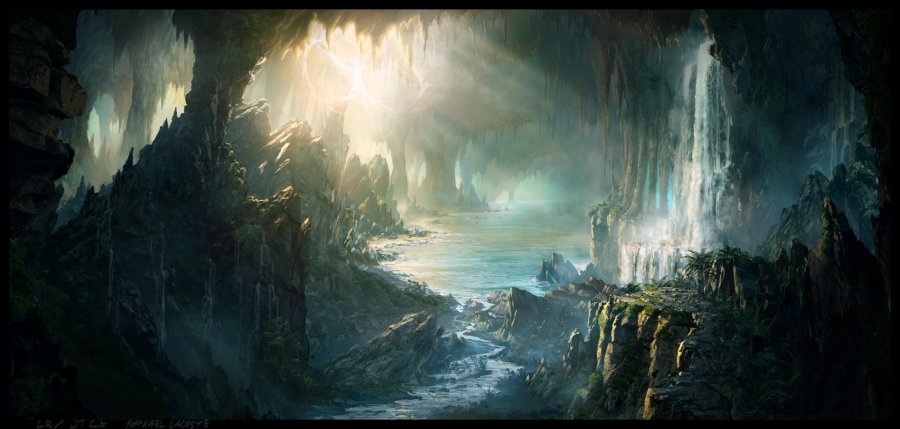
The Fall of Math

I have recently being reading Welsh and Irish Medieval  texts I am a huge fan (Táin, Mabinogion, Second Battle of Mag Turied, amongst others), so I wrote a short little scene based on some of our ideas about what Celtic culture may have been like in ancient times, this is short sweet, and by no means one hundred percent accurate, just uses some of the tropes and ideas we know in what I hope is a fun way. I was speciffically inspired by CuChulainn and laments. This was a warrior culture so Warning: there is violence!

Have a lovely day!


His blade flashed through the fading light, neatly severing Math’s head, the spray of blood warm against his face. Math’s body collapsed to the ground, twitching out its last moments of life. Diarmiad stared at the fallen warrior with a detached sense of loss. He panted heavily, blood leaking from numerous wounds as he cleaned his sword with the edge of his shirt, wiping with slow methodical movements. 

Continue reading “The Fall of Math”

Space Giants

There are legends of far-flung planets suspended at the edge of all that we know, hovering in the wide expanse of space and lit by the luminesce of trillions of ancient stars.  These skies are filled with a tapestry of diamonds, flung brilliantly across the heavens over empty, silent planets.  Planets where mankind has not left their mark.  Planets of greenery and foliage, of ice and snow, of sand and rock.  Planets built of nothing but great rolling breakers crashing on shoreless seas.  Uninhabited, untouched, unseen.  Infinite.

In these skies giants dwell.  

Continue reading “Space Giants”

The Measure of Humanity: Part 4

I have gotten a bit philosophical on the definitions of humanity and the qualities that comprise aspects of it, but now I want to turn and instead look at what the motivations and treatment of the characters on these topics reveal about why this issue is explored in these stories. As is common in many Dystopian stories there is this overriding fear of mechanization, that humans will become obsolete as machines and engineering creating superior inventions. In Blade Runner, the replicants’ are perfect physically, stronger, faster, and in ways smarter. The replicants existence is a threat to the status quo and if allowed to gain emotions and live longer they could very well surpass humans at the top of the power hierarchy. Continue reading “The Measure of Humanity: Part 4”

A Gallimaufry of Words

In my nearly nineteen years of existence I have come to fall deeply in love with the intricacies, the simplicities, the depth, and the beauty of words.  I survive on them.  I collect them, I organize them, I keep lists of them in my notebooks, and often I rearrange them into patterns that create worlds and stories from the emptiness of a blank page.  My bones are crafted of words, my blood runs with rivers of them, and my tongue tastes their lilting, rolling, rumbling flavors, big words and small words and beautiful words and ugly words, mysterious words and boring words, austere words and ostentatious words, old and new words, some fresh and some slightly used, lost, or brand-new.  I find an inexplicable charm in words.         

I like archaic words that nobody uses anymore, like athenaeum, obfuscate, erstwhile and contumelious.  These words are aged, like fine wine, but forgotten behind the mask of modern terms and a changing world, ones one might find in old books like Shakespeare or Jules Verne.  But I also like normal words we use every day, like cabinet, paperclip, honey, and teapot.      Continue reading “A Gallimaufry of Words”

The Measure of Humanity: Part 3

One of the most primal reactions I can think of is the desire to live, to continue existing for as long as possible, to fight and scratch, and struggle to survive. The right to live is one we all desperately hold on to, the right to decide for ourselves to face tomorrow. In continuing to prove just how human he seems to be Roy says, “‘I want more life’” when asked what the problem is by Tyrell (Blade Runner). The desire to live, a conscious awareness of one’s continued existence and even more importantly a recognition that it will all end. Replicants are struggling to find agency in their lives, to make decisions about the way they live and what they do, and because their lives are confined to four years they are reduced to a limited number of experiences, to a limited existence. Data experiences a similar, if not slightly more logic bound, response to the possibility of his destruction. Continue reading “The Measure of Humanity: Part 3”

‘Downward’; a Review of Journey to the Center of the Earth

I have a love for old books, especially this style.  These kinds of stories have always intrigued me, they have always been mysterious and simple, old and new at the same time, these stories about science or technology, told from the point of view of someone who lived before many major scientific breakthroughs were made.  Jules Verne was an 1800s French author who is often said to have laid down the foundation for modern science fiction, along with H. G. Wells.  He wrote about submarines in 20,000 Leagues Under the Sea before submarines were even invented, as well as a gun that delivered an electric shock (tasers!).  From the Earth to the Moon he wrote about the possibility of light-propelled spacecraft which are now in the process of being created (solar sails), as well as what we now have invented and call lunar modules that carry people to space.  And, in Journey to the Center of the Earth, he explored the possibility of reaching the core of our planet through networks of caves and tunnels.  And, even knowing the impossibility of such a feat now because of heat, magma, etc., reading this book I could almost believe it was possible.

While there is life there is hope.  I beg to assert…that as long as a man’s heart beats, as long as a man’s flesh quivers, I do not allow that a being gifted with thought can allow himself to despair.

Continue reading “‘Downward’; a Review of Journey to the Center of the Earth”

The Measure of Humanity: Part 2

Star Trek: Next Gen paints us a very different but just as thought-provoking picture of an other struggling to gain a place in society. In the episode “The Measure of a Man” Data an android officer of Starfleet is ruled to be the property of the federation and therefore he can be dismantled in the pursuit of science. Captain Picard and Data challenge this ruling and have a court hearing to determine if as an android he possesses rights or not. In contrast to replicants, androids are in fact completely mechanical creations, lacking all biological components. They are made in the image of man, to serve and resemble and function as a human would. Commander Maddox, the scientist working to declare Data as property, when faced with the outrage of Captain Picard who considers Data an individual and sentient being, says, “‘You are endowing Data with human characteristics because it looks human. But it is not’”. Continue reading “The Measure of Humanity: Part 2”

Which Way Might I Turn?

He stood at a break in the road.

The rocky, muddied path split from one to four, so that he stood in the middle of a crossroads with one stretching to the right, one to the left, and two more before and behind him.  Above hung the sky, and the sun, and the clouds, and below spread the dirt and the soil and the dry dead leaves that whispered as they tumbled over the rocks in the wake of autumn’s chilling breath.

Four roads.  

Four futures.

One past.

Continue reading “Which Way Might I Turn?”

The Measure of Humanity: Part 1

I have always been fascinated by the idea that humanity is an intrinsic quality, one that is gained through life and experience, and that this quality is not necessarily constrained to mere humans. The question of what makes up humanity, who possesses it, and how can you measure its existence is one that has been explored in the science fiction genre for decades. I am interested in the concern specific works show over the idea as explored through whether or not mechanical engineered creations can possess humanity or even sentience. I want to explore the different ways Blade Runner and Star Trek: Next Generation delve into these questions, looking at the qualities and issues they investigate as well as the different concerns surrounding this debate as portrayed by the stances characters take.  The qualities that make a human deserving of rights are often ineffable and hard to define, and yet we hold our right to certain truths and respect to be self-evident. Continue reading “The Measure of Humanity: Part 1”

Soul-Seekers

Short (long?) story excerpt/brief outline I’m working on.


In Sir Alistair Gavell’s Book of Told and Untold Secrets, souls are described as being, and I quote, ‘…the patterns to unique quiddities which have been left behind—lost, as it were, to the infinite and unkind hands of indomitable time.  They are pieces of existence, the unfinished pearls lacking a shell to rest in, the dark remains from fallen light.  They are, in essence, the undulating memory of someone or something which used to be, but is no more, and never shall be again.’

Souls are not so mysterious–nor enchanting–as Sir Alistair makes them out to be.  They are far more rugged, more jagged and torn along the edges.  Some are beautiful, though all have their scars; while some can be quite ugly and nasty. 

Others…others are almost terrifying.

There are light souls, as light as a feather and the color of melted gold and silver.

There are heavy souls, heavy as a millstone and the color of crimson blood and spilled ink.

There are in-between souls, which don’t know whether to be light or heavy, gold or red, silver or black.  We call them Neithers, because they are neither one nor the other, neither light nor dark.  These are the most common, the most ordinary.  

But there is also a certain breed of soul which is so white it burns your eyes and weighs nearly nothing in your palm, shimmering with all the light of eternity, and there is its opposite: a soul that is so black it consumes all light and weighs more than a handful of mountains.  These are the most rare.  They are also the most dangerous.           

I would know.  I have spent the past seven centuries searching for them.

Continue reading “Soul-Seekers”